

US-Iran Ceasefire: What You Need To Know
Both the US and Iran claimed victory and clashed over terms of the ceasefire
By The Media Line Staff
President Donald Trump announced a two-week ceasefire with Iran on Tuesday, marking a pause in weeks of escalating conflict—but the terms and scope of the agreement remain contested, with both sides offering conflicting accounts of what was agreed.
Disputes have emerged over issues including transit fees in the Strait of Hormuz, Iran’s nuclear program, and whether the ceasefire extends beyond US-Iran hostilities to include Israel and Lebanon. Even as the deal took effect, Israel intensified operations against Hezbollah, Gulf states reported attacks, and only a handful of vessels moved through the critical waterway.
Trump said he agreed to halt planned strikes less than two hours before an 8 p.m. deadline, following talks with Pakistani Prime Minister Shehbaz Sharif and Field Marshal Asim Munir. The pause, he said, was conditional on Iran reopening the Strait of Hormuz.
“Based on conversations with Prime Minister Shehbaz Sharif and Field Marshal Asim Munir … and subject to the Islamic Republic of Iran agreeing to the COMPLETE, IMMEDIATE, and SAFE OPENING of the Strait of Hormuz, I agree to suspend the bombing … for a period of two weeks,” Trump wrote on Truth Social, calling it a “double sided CEASEFIRE.”
He said US forces had already achieved their objectives and that a 10-point Iranian proposal could serve as a basis for a broader agreement. Pakistan has invited both sides to continue talks, with US officials telling CNN a meeting is expected in Islamabad. Special envoy Steve Witkoff and chief adviser Jared Kushner are being sent by President Trump to Islamabad for further negotiations, with Vice President JD Vance also expected to attend.
Iran confirmed the ceasefire but described it as a strategic win. A statement from Iran’s Supreme National Security Council, reported by Iranian state media and obtained by CNN, said Washington had in principle accepted elements of Tehran’s proposal, including sanctions relief, recognition of Iran’s nuclear enrichment rights, and coordination over shipping through the Strait of Hormuz. Iranian Foreign Minister Abbas Araghchi said safe passage would be arranged in coordination with Iran’s armed forces and that attacks would stop if strikes on Iran ceased.
President Trump rejected Iran’s characterization, calling the reported statement a “FRAUD” and accusing CNN of amplifying false information. The White House, however, framed the ceasefire as a US victory, with press secretary Karoline Leavitt highlighting military gains. Leavitt has also rejected Iranian claims that vessels would be charged tolls to transit the Strait of Hormuz, saying the US is working to ensure free passage. While Iran has threatened to restrict or block shipping, she said the US military is acting to keep the waterway open.
The US president later told AFP the outcome was a “total and complete victory” and said Iran’s uranium would be “perfectly taken care of.” He also told ABC News the US could help manage shipping through the strait in a “joint venture” with Iran.
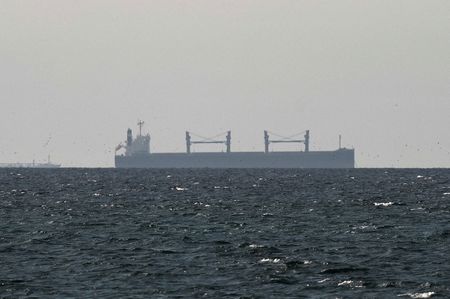
Early signs of stabilization were limited. MarineTraffic data showed only two vessels had transited the Strait of Hormuz by Wednesday afternoon, while hundreds remained backed up, including more than 400 tankers. Iran was reported by Tasnim to be preparing to charge transit fees during the ceasefire.
At the same time, attacks continued elsewhere. Kuwait said Iranian drone strikes caused significant damage to oil facilities, power stations, and water infrastructure, while the United Arab Emirates reported intercepting missiles and drones. A key Saudi oil pipeline was also struck by a drone, the Financial Times reported.
The ceasefire does not extend to Lebanon, according to Israeli Prime Minister Benjamin Netanyahu’s office, despite earlier indications from Pakistan to the contrary. Israel said it would halt strikes on Iran but continue operations against Hezbollah. Trump told PBS NewsHour the fighting in Lebanon was a “separate skirmish.”
Israeli forces carried out major strikes in Beirut, including a targeted attack on a Hezbollah commander, with Lebanon’s health ministry reporting heavy casualties. Israel’s foreign ministry defended the operations, accusing the Lebanese government of failing to act against Hezbollah.
Iran’s Islamic Revolutionary Guard Corps (IRGC) warned it would respond if attacks on Lebanon continue, raising the risk of broader escalation. In a statement carried by IRIB, the IRGC accused Israel of carrying out a “brutal massacre” in Beirut only hours after the ceasefire announcement and said that if “aggressions” against “dear Lebanon” do not stop, it will “act upon our duty” and deliver a “regret-inducing response” to what it called “evil aggressors in the region.”
At the Pentagon, Defense Secretary Pete Hegseth said any prohibited nuclear material in Iran would be removed under the agreement, while Gen. Dan Caine said US forces remain ready to resume combat operations if ordered, underscoring the uncertainty surrounding the ceasefire’s durability.
Brought to you by www.srnnews.com
 Ocean protections clash with mining pressure in Indonesia’s most diverse marine ecosystem
 Greek PM says tolls for ships to cross Hormuz would be unacceptable, a risk to freedom of navigation
 Photos from Tehran, where daily life continues despite war