
What Happens When UNIFIL Leaves Lebanon?
After nearly five decades of UN peacekeeping in southern Lebanon, the approaching end of UNIFIL raises questions about who will monitor the border, support the Lebanese army, and help prevent another Israel-Hezbollah war
By Felice Friedson/The Media Line
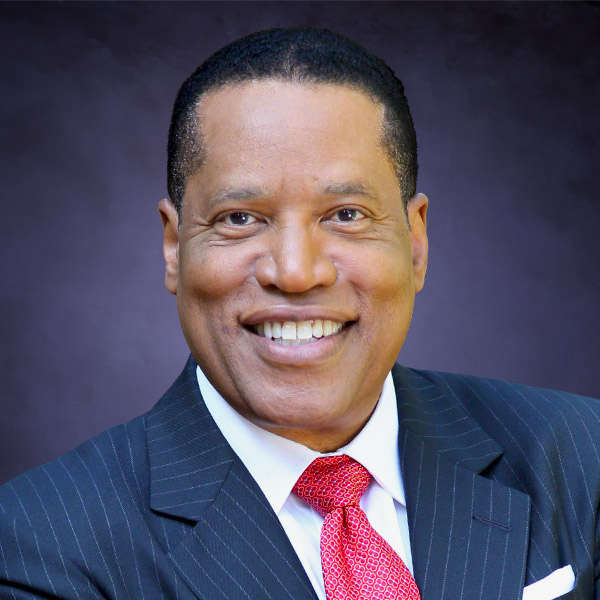
Lebanese President Joseph Aoun and Jordan’s King Abdullah II are set to join French President Emmanuel Macron in Paris on Thursday for talks on what comes next after nearly five decades of UN peacekeeping in southern Lebanon.
The deadline is approaching quickly. The United Nations Interim Force in Lebanon, better known as UNIFIL, is scheduled to end normal operations on Dec. 31, 2026, followed by an orderly withdrawal.
France and Italy are working on plans for a possible multinational successor, and European countries have expressed interest in providing training and advisory support to the Lebanese Armed Forces. Lebanon, meanwhile, is making a late push to keep UNIFIL in place a little longer, warning that withdrawing the force under current conditions could leave a security vacuum.
Having covered the Israel-Lebanon border for years, I have seen how much UNIFIL has become part of the landscape. Its armored vehicles travel roads through villages close to the Israeli border, and its bases dot an area where Israel, Hezbollah and the Lebanese state have repeatedly competed for security and control.
So what actually disappears when UNIFIL leaves—and who takes its place?
UNIFIL was created in 1978 after Israel entered southern Lebanon following Palestinian attacks. Its original mission was to confirm Israel’s withdrawal, help restore international peace and security, and assist the Lebanese government in restoring its authority in the area.
Its role grew substantially after the 2006 Israel-Hezbollah war. UN Security Council Resolution 1701 called for the area between the Blue Line and the Litani River to be free of armed personnel and weapons other than those belonging to the Lebanese government and UNIFIL.
That never happened completely. Hezbollah built extensive military infrastructure in southern Lebanon in the years that followed, and Israel repeatedly accused UNIFIL of failing to prevent the Iran-backed group from entrenching itself near the border.
UNIFIL’s answer has long been that it was never given the job of forcibly disarming Hezbollah. It is a peacekeeping force, not an army tasked with imposing Resolution 1701 at gunpoint. Establishing Lebanese state authority is ultimately the responsibility of the Lebanese government and the Lebanese Armed Forces.
That distinction has been at the heart of much of the argument over UNIFIL’s record.
Its peacekeepers patrol, observe and document violations while supporting the Lebanese military. They also provide an international presence in territory where Israel, Lebanon and Hezbollah can give sharply different accounts of the same incident.
UNIFIL has another role that receives less attention. Israel and Lebanon have no diplomatic relations and technically remain at war. The force has provided an established channel through which messages can pass between the two sides when tensions rise.
The current conflict has made its job even more complicated. More than half of UNIFIL’s nearly 50 bases are now in Israeli-controlled territory in southern Lebanon, according to Reuters. Peacekeepers have escorted humanitarian convoys and helped maintain access to communities cut off by fighting. They have also facilitated access for UN personnel investigating possible violations of international law.
The force now numbers more than 7,500 peacekeepers. Once they are gone, somebody else will have to perform those functions—or they will no longer be performed.
The Security Council expects the Lebanese state eventually to become the sole provider of security in the south. Much of that responsibility would fall to the Lebanese Armed Forces.
But Lebanon’s military has long struggled with shortages of equipment, resources and funding. It is also being asked to do something far more politically sensitive: establish a state monopoly on weapons.
And that means confronting the question of Hezbollah.
Aoun has said Hezbollah must ultimately be disarmed, while making clear that he does not want the process to lead to internal armed conflict. Israel wants assurances that Hezbollah will not rebuild the military infrastructure that allowed it to threaten communities across Israel’s northern border. Lebanon insists that Israeli forces must leave Lebanese territory.
A US-brokered framework agreed to in June was supposed to link a gradual Israeli withdrawal with Hezbollah’s disarmament and the deployment of Lebanese troops in the south. The process has stalled. UNIFIL is preparing to leave while the basic security dispute remains unresolved.
That dispute will hang over Thursday’s talks in Paris.
France and Italy have been developing plans for the post-UNIFIL period, including an international coalition to support the Lebanese army. More than 10 European Union countries have shown interest in participating, although the structure and mandate of any mission remain unsettled.
But a force that succeeds UNIFIL would not necessarily do what UNIFIL does now.
A training and advisory mission, for example, might not patrol southern Lebanon or monitor the Blue Line. It might not investigate violations or provide the same liaison mechanism between Israel and Lebanon. Its personnel could have little or no authority to respond if they encountered unauthorized weapons or armed Hezbollah members.
Strengthening the Lebanese army is one mission. Peacekeeping is another.
There is also the possibility that UNIFIL could stay a little longer.
Lebanon has been lobbying for a limited extension beyond Dec. 31, and France is supporting that effort. Diplomats have indicated that winning another Security Council extension will be difficult, particularly given US and Israeli support for ending the mission.
Even without an extension, UNIFIL will not disappear at midnight on Dec. 31. Normal operations are scheduled to end then, followed by an orderly withdrawal lasting no longer than one year as bases are closed and positions handed over.
That gives Lebanon and its international partners some time. Whether a replacement will be ready is another question.
Israel’s chief concern is that southern Lebanon not again become a base for attacks across the border. Lebanon’s is sovereignty: whether its government and army can exercise authority throughout the country without Israeli forces on Lebanese territory and without Hezbollah maintaining an independent military structure.
I have covered enough rounds of conflict along this border to know that quiet does not necessarily mean the underlying problems have been solved. UNIFIL did not solve them, and its record has drawn plenty of criticism. But when the peacekeepers leave, an international presence that has been there for almost half a century will go with them.
Paris is not simply deciding what replaces the blue helmets.
The harder question is whether Lebanon’s army, backed by whatever international arrangement emerges, can do what UNIFIL never could: make the Lebanese state the sole armed authority in the south and reduce the chances that Israel and Hezbollah will find themselves fighting yet another war.
Brought to you by www.srnnews.com
 Argentine judge orders halt to Falklands oil project as tensions with Britain rise
 Factbox-AI rivalry hangs over Trump-Xi talks
 North Korea’s Kim Yo Jong denounces IAEA’s meeting on denuclearization