
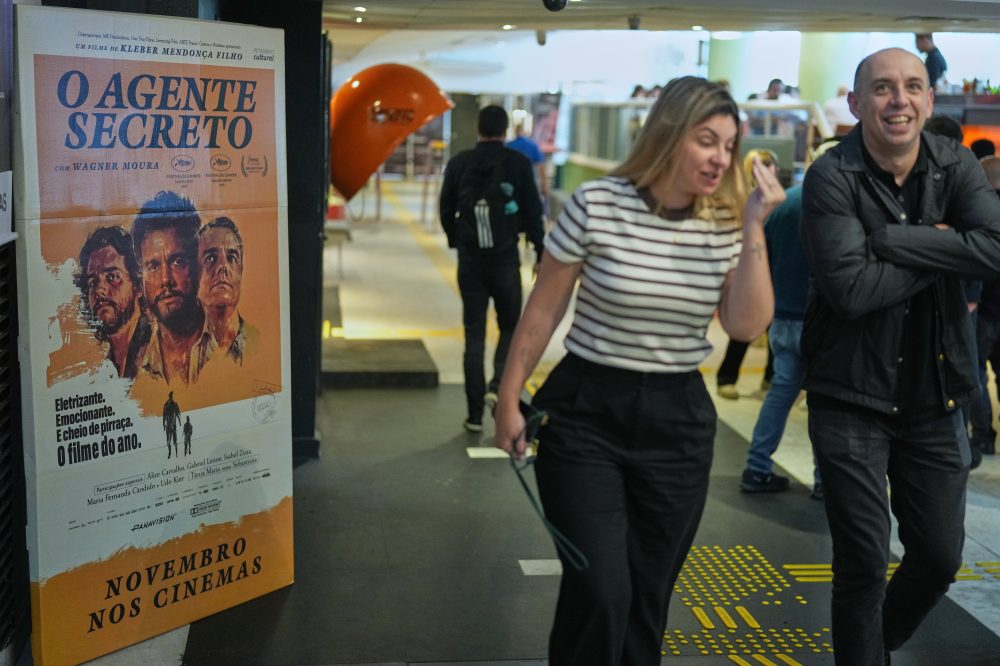
RIO DE JANEIRO (AP) — Brazilians celebrated the nomination of “The Secret Agent” film to four Oscar categories on Thursday, which many said confirmed the rise of Brazilian cinema and its universal appeal.
“The Secret Agent” — nominated for best picture, best actor, best international film and achievement in casting — now shares Brazil’s record for nominations, alongside the famed 2002 film “City of God” set in a favela in Rio de Janeiro.
“The Secret Agent” follows a widowed father — played by Wagner Moura — who becomes a target of Brazil’s military dictatorship in the 1970s simply because he stands up to a business owner with ties to the regime.
Director Kleber Mendonça Filho said that more than one million spectators have seen the film, in a video posted on social media Thursday following the nominations.
Last year, Brazilian feature film “I’m Still Here” was also a box office success, drawing millions of moviegoers. It was nominated in three categories and won best international feature, giving Brazil its first Oscar.
The back-to-back successes are leading many to say that Brazil is living a particularly fruitful moment for its cinema — including President Luiz Inácio Lula da Silva, who said that the local industry is currently “experiencing one of the best moments in its history.”
The nominations are “recognition of our culture and of Brazil’s ability to tell stories that move the world,” he said on social media.
“I’m Still Here” is also set during the dictatorship, and observers say both films have contributed to nationwide discussion about the dark period in Brazil’s history from 1964 to 1985, when people were tortured and disappeared.
Lúcia Espírito Santo, a 78-year-old retired lawyer, said that she herself had to watch her words when she was studying law at university for fear of disappearing.
“What we see in the film happened a lot. People would disappear and you didn’t know why. Friends of mine from college disappeared because they spoke out, they advocated for freedom and democracy,” she said, exiting the cinema after seeing the film.
Sabrina Guimarães, a 20-year-old student at a Rio de Janeiro university, who went to see the film Thursday, said learning about the country’s history is essential.
“Even though we learn this stuff at school, we don’t spend much time on it and it’s not very specific. Feeling like you’re there in the person’s shoes, knowing what was happening at the time is very interesting,” she said.
“It’s good to understand what happened in the past so we don’t repeat these things in the future.”
Director Mendonça Filho said the film is a reaction to Brazil’s past decade of political turmoil, including the far-right administration of former President Jair Bolsonaro, who last year was sentenced to 27 years and three months in prison for attempting a coup.
But the film also dialogues with the political climate in other places around the world, he said in an interview with The Associated Press on Thursday.
“The film is very Brazilian, but it’s also universal, so it can be used to discuss issues in the United States, in Europe or in Brazil,” Mendonça Filho said. “The theme of power being used to crush people and social classes is a theme that’s current, not just historical.”
Casting director Gabriel Domingues, who was nominated in the new category of “achievement in casting,” said the outpouring of support for the film reflects broader enthusiasm for Brazilian cinema.
“Brazilian cinema is really in a moment of intense emotion, beyond just excitement. People get very moved, with this participation in international events and awards and everything,” Domingues told The Associated Press, comparing it to Brazil’s atmosphere around soccer.
Ana Paula Sousa, an expert in cinema and teacher at the ESPM University in Sao Paulo, said that the achievements of “I’m Still Here” and “The Secret Agent” are changing Brazilians’ relation to the film industry in a country were movie attendance is historically low.
“People are talking about Brazilian cinema and thinking it’s cool to talk about it. (…) That’s something we didn’t see before, and it’s really great,” she said.
Sousa said she hopes the successes will spark more consistent movie attendance among Brazilians.
Espírito Santo, the elderly moviegoer in Rio, said that she was incredibly proud of Brazilian cinema following the Oscar nominations.
“We’re showing up, stepping onto the red carpet abroad,” she said. “Brazil is starting to look like a producer of films, of well-told stories.”
___
Tatiana Pollastri contributed to this report from Sao Paulo.
Brought to you by www.srnnews.com
 The Media Line: Pakistan Accepts Trump’s Invitation To Join Board of Peace
 In Davos, African president pitches business deals to Trump’s son Eric