
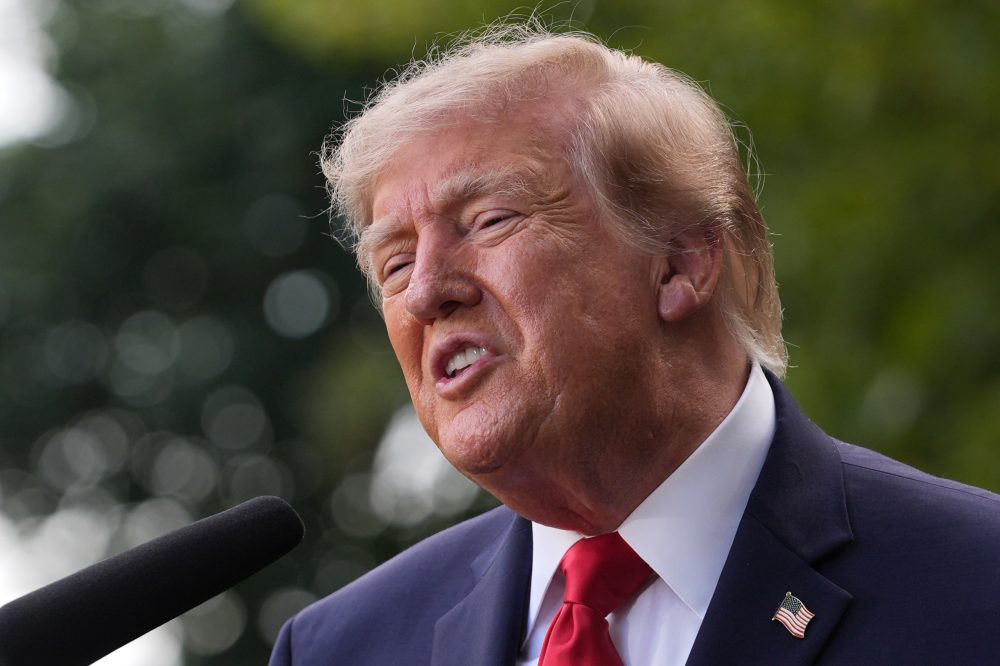
NEW YORK (SRN NEWS) – President Donald Trump heads to the United Nations General Assembly today, prepared to defend his foreign-policy record and argue that American strength is making the world safer.
The president’s address comes at a turbulent moment. The war with Iran has disrupted global energy markets, raised concerns about shipping through the Strait of Hormuz, and increased pressure on the international economy. At the same time, world leaders are confronting the rapid growth of artificial intelligence and questions about how the technology could affect jobs, security, and society.
The White House says President Trump will use his speech to explain how his administration is confronting long-standing global challenges and reshaping international policy to benefit the United States.
U.S. Ambassador to the United Nations Mike Waltz says the president will make the case that the world is better off when America leads decisively rather than allowing international crises to grow unchecked.
Iran is expected to dominate the speech.
The conflict is now approaching its seventh month. President Trump has said military action was necessary to prevent Iran from obtaining a nuclear weapon. U.S. and Israeli strikes have severely damaged Iran’s military capabilities, while sanctions and an American blockade of Iranian oil have placed enormous pressure on Tehran’s economy.
But the war has also created serious consequences beyond Iran’s borders. Oil prices remain elevated, and shipping companies face growing risks near the Strait of Hormuz and the Bab al-Mandab Strait. Iran-backed militants have attacked regional infrastructure, while threats from Yemen-based Houthi rebels have made parts of the Red Sea increasingly dangerous for commercial shipping.
The Trump administration says substantial oil and gas are still moving through the region, with American forces helping protect freedom of navigation. Officials are expected to emphasize that global commerce cannot be held hostage by Iran or its proxies.
At the same time, diplomatic efforts continue. Qatar and other mediators are trying to reopen negotiations between Washington and Tehran. Secretary of State Marco Rubio says President Trump remains willing to meet with Iran’s president, even though a meeting would not guarantee agreement.
The president will also hold a series of important talks during his visit. He is scheduled to meet with British Prime Minister Andy Burnham, Japanese Prime Minister Sanae Takaichi, Ukrainian President Volodymyr Zelenskyy, and Venezuela’s acting president, Delcy Rodríguez.
Trump will meet with leaders from Bahrain, Kuwait, Oman, Qatar, Saudi Arabia, and the United Arab Emirates to discuss regional security and the future of the conflict.
Ukraine will also be on the agenda. President Trump has expressed frustration that Russia and Ukraine continue attacking energy infrastructure, despite proposals for a temporary agreement not to target each other’s power systems and fuel facilities.
The president is also expected to participate in a signing ceremony involving Denmark and Greenland. The agreement would expand the American military presence in Greenland while keeping the territory under Danish control — an arrangement supporters say will strengthen U.S. security in the Arctic.
Artificial intelligence may receive attention as well, particularly its potential impact on national security and the global economy.
President Trump’s message at the United Nations is expected to be direct: American leadership, military strength, and economic pressure are necessary to confront threats and protect the nation’s interests.
Brought to you by www.srnnews.com