
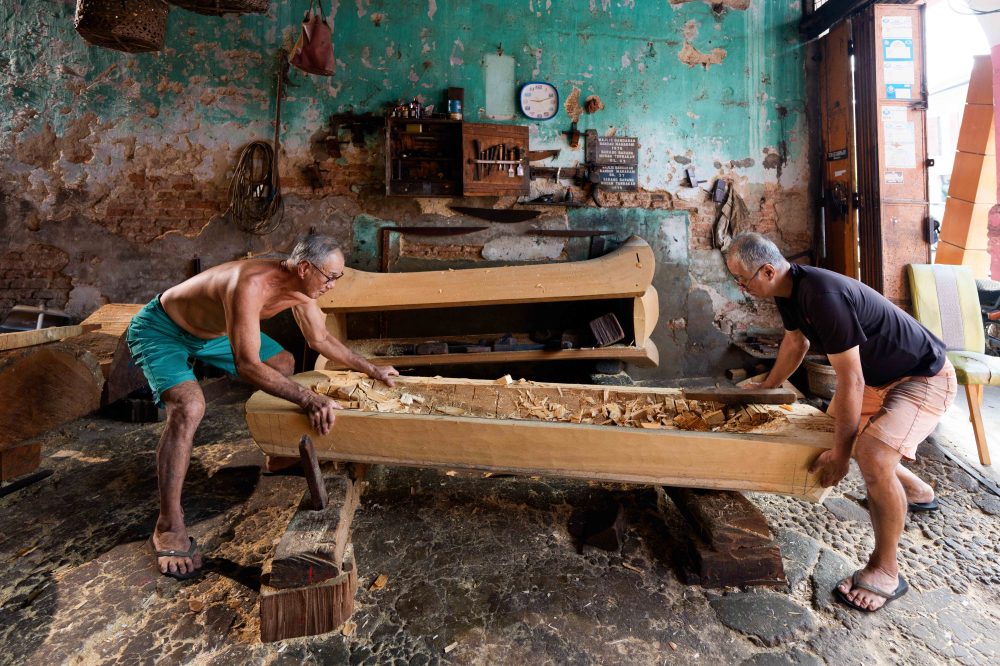
MUAR, Malaysia (AP) — Goh Khuay Par has spent more than five decades making traditional Chinese coffins called Mei Hua in Malaysia, carrying on a family craft passed down through three generations.
Each coffin is made by hand and requires many days of work. Years ago, when the workshop had more craftsmen and more orders, they could turn out up to five a month. These days Goh, 69, and his brother Goh Khuay Hou, 72, make about two every six to seven weeks.
The coffins hold cultural significance in traditional Chinese beliefs surrounding death, burial and respect for ancestors. But changing funeral customs and the growing prevalence of cremation have reduced demand for the large wooden coffins, leaving an uncertain future for Goh’s craft.
___
Associated Press religion coverage receives support through the AP’s collaboration with The Conversation US, with funding from Lilly Endowment Inc. The AP is solely responsible for this content.
Brought to you by www.srnnews.com
 Africa’s urban waste crisis is outpacing infrastructure investment and choking neighborhoods
 Indonesia welcomes its first aircraft carrier, prompting debate over cost and military ambitions
 South Korea’s Lee says will not deploy military to get involved in Middle East conflict
 A sweeping US sanctions bill offers Ukraine new leverage on Russia, but enforcement looms