By Maha El Dahan and Nayera Abdallah
DUBAI, Feb 3 – Regional power United Arab Emirates urged Iran and the United States on Tuesday to strike a nuclear deal and reach a long-term solution to tensions ahead of the resumption of talks between the foes and regional states, emphasizing that the Middle East does not need another war.
Iran and the United States will resume nuclear talks on Friday in Turkey, Iranian and U.S. officials told Reuters on Monday. U.S. President Donald Trump warned that with big U.S. warships heading to Iran, “bad things” would probably happen if a deal could not be reached.
The UAE, a highly influential Gulf Arab power and close U.S. ally, said a long-term solution was needed.
“I think that the region has gone through various calamitous confrontations. I don’t think we need another one, but I would like to see direct Iranian-American negotiations leading to understandings so that we don’t have these issues every other day,” the UAE president’s adviser Anwar Gargash told a panel at the World Governments Summit in Dubai.
IRAN FEARS US STRIKE MIGHT IMPERIL RULE, SOURCES SAY
U.S. Special Envoy Steve Witkoff and Iranian Foreign Minister Abbas Araqchi will meet in Istanbul in an effort to revive diplomacy over a long-running dispute about Iran’s nuclear programme and dispel fears of a new regional war. A regional diplomat said representatives from countries such as Saudi Arabia and Egypt would also participate.
The U.S. naval buildup near Iran follows a violent crackdown against anti-government demonstrations last month.
Trump, who stopped short of carrying out threats to intervene, has since demanded Tehran make nuclear concessions and sent a flotilla to its coast. He said last week Iran was “seriously talking”, while Tehran’s top security official Ali Larijani said arrangements for negotiations were under way.
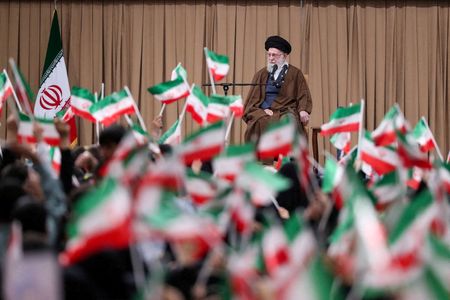
Iran’s leadership is increasingly worried a U.S. strike could break its grip on power by driving an already enraged public back onto the streets, according to six current and former officials.
In high-level meetings, officials told Supreme Leader Ayatollah Ali Khamenei that public anger over last month’s crackdown – the bloodiest since the 1979 Islamic Revolution– has reached a point where fear is no longer a deterrent, four current officials briefed on the discussions said.
Iranian sources told Reuters last week that Trump had demanded three conditions for resumption of talks: Zero enrichment of uranium in Iran, limits on Tehran’s ballistic missile programme and ending its support for regional proxies.
Iran has long rejected all three demands as unacceptable infringements of its sovereignty, but two Iranian officials told Reuters its clerical rulers saw the ballistic missile programme, rather than uranium enrichment, as the bigger obstacle.
Tehran’s regional sway has been weakened by Israel’s attacks on its proxies – from Hamas in Gaza to Hezbollah in Lebanon, the Houthis in Yemen and militias in Iraq – as well as by the ousting of Iran’s close ally, former Syrian President Bashar al-Assad.
In June last year the United States struck Iranian nuclear targets, joining in at the close of a 12-day Israeli bombing campaign. Since then, Tehran has said its uranium enrichment work has stopped.
Recent satellite imagery of two of the targeted sites, Isfahan and Natanz, appears to show some repair work since December, with new roofing over two previously destroyed buildings. No other rebuilding was visible, according to the imagery provided by Planet Labs and reviewed by Reuters.
(Reporting by Reporting by Nayera Abdallah, Maha El Dahan,Jana Choukeir, Federico Maccioni and Parisa Hafeezi; Writing by Michael Georgy, Editing by Philippa Fletcher)
Brought to you by www.srnnews.com
 Ukraine to adjust peace negotiators’ work after Russia’s strike, Zelenskiy says
 Soldiers, snow plows in Japan battle deadly winter storms
 Palestinians line up to cross Rafah after rocky first day of reopening of Gaza-Egypt border crossing