
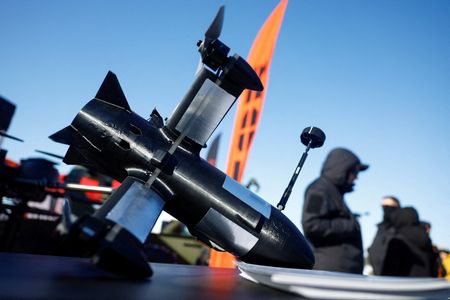
March 7 (Reuters) – Ukrainian manufacturers of cheap interceptor drones designed to knock out enemy unmanned aerial vehicles (UAVs) say they have the capacity to export in large volumes, amid enquiries from the United States and Middle East prompted by the Iran war.
Hundreds of drones based on Iran’s Shahed model and now made in Russia fill Ukraine’s skies during frequent attacks, and many are downed by air defences including Western missiles, fighter jets, truck-mounted guns and interceptor drones.
Now, as Iran launches drones at U.S. allies across the Gulf and beyond in response to intense U.S. and Israeli strikes, Ukraine is hoping the Middle East crisis will increase its leverage with allies by showing them the expertise it has built during four years of Russia’s full-scale invasion could be invaluable to partners’ own long-term security.
With missiles sometimes costing millions of dollars each, and in short supply as Western armies scramble to bolster their own defences, interceptors are seen as an efficient and cost-effective way to counter attacks by relatively cheap drones.
The United States and its allies in the Middle East have swiftly sought Ukraine’s help with supplying such interceptors.
President Volodymyr Zelenskiy said on Thursday Ukraine would provide assistance in response to a U.S. request for help and said earlier that Middle Eastern nations had approached Kyiv.
Zelenskiy did not specify what this would entail, but a source familiar with the matter told Reuters that the United States and Qatar were in talks to purchase Ukrainian interceptor drones.
SUPPLY OUTSTRIPS DEMAND IN UKRAINE
SkyFall, a major manufacturer of drones including interceptors, said its manufacturing capacity had outgrown Ukraine’s ability to purchase its systems and the company was ready to export.
“We have had interest and inquiries from our (allies) and countries in the Middle East,” said Ares, a representative of SkyFall who wore a balaclava as he spoke to hide his identity.
Ares spoke on condition that only his call-sign be used.
SkyFall says its P1-SUN interceptor has downed more than 1,500 Shaheds and 1,000 other drones since it entered operations four months ago.
“The company is ready to provide any necessary assistance if we get the green light from our government,” he said, adding that it would only do so if it did not affect Ukraine’s ability to defend itself.
Ihor Fedirko, CEO of UCDI, Ukraine’s state-backed arms manufacturers’ association, estimated that manufacturers of interceptor UAVs and other counter-drone systems were making about twice as many as the Ukrainian military needed to deal with Russia’s frequent barrages.
SkyFall asked that the location of its factory not be disclosed. During a recent visit, Reuters reporters saw long rows of 3D printers churning out plastic drone components and halls of workers soldering and assembling drones.
The company estimated it could manufacture up to 50,000 interceptor drones a month and export 5,000 to 10,000 without impinging on Ukraine’s needs.
Although Ukraine does not shoot down every drone fired by Russia, this is not always down to munition availability and can instead be a question of co-ordination.
Kyiv is striving to better layer its air defences in order to allow fewer targets through, and sees boosting interceptor drone use as a key piece of the puzzle.
In February, they were responsible for 70% of the drones downed in and around Kyiv, according to Ukraine’s military.
INTERCEPTORS COST FRACTION OF MISSILES
Most Ukrainian interceptor drones cost a few thousand dollars or less. In comparison, PAC-3 missiles used in the coveted U.S. Patriot air defence system, can cost $4 million each and tend to be used to bring down enemy missiles.
Shahed-136 drones, designed by Iran and now mass-manufactured by Russia, are estimated to cost between $50,000 and $100,000 each.
SkyFall markets the P1-SUN as a highly cost-effective option. Depending on the model’s specifications, it charges Ukraine’s military about $1,000 per drone.
“If we are talking about export and … assistance to partners, then the price will most likely be higher,” Ares said, although he believed it would still represent the cheapest option.
Industry representatives said one of the biggest obstacles to using Ukrainian interceptor drones in the Gulf was pilots rather than drones. Ukraine is the only country with drone crews who know how to use these systems in combat.
SkyFall has its own academy that provides a three-week course to new pilots, and the company said it would be ready to send instructors abroad in the event that Ukraine’s government allowed it to sell drones to other countries.
It also said it has developed capabilities to pilot its drones remotely, meaning drones could potentially be flown in the Gulf from a screen in Ukraine.
(Reporting by Max Hunder; Additional reporting by Vladyslav Smilianets and Valentyn Ogirenko; Editing by Mike Collett-White and Alex Richardson)
Brought to you by www.srnnews.com
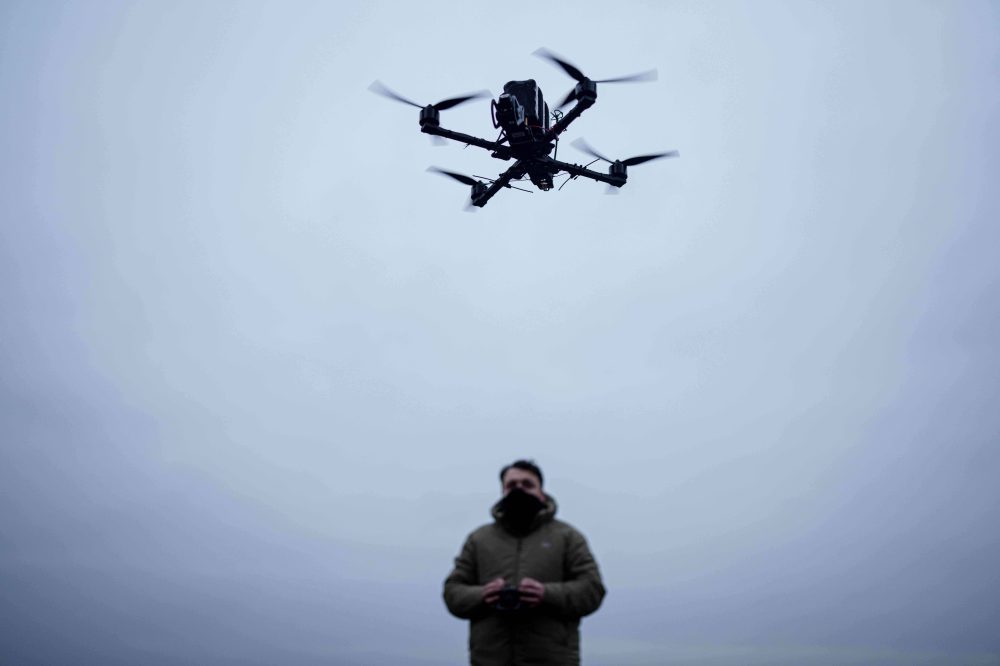 Ukraine’s low-cost Shahed killers draw US and Gulf interest, but a wartime ban blocks sales
 Pope names veteran Vatican diplomat as ambassador to the US to manage relations with Trump
 Turkey considering deployment of F-16s to Cyprus, ministry source says
 Trump cannot end protections for 350,000 Haitians, US appeals court rules