
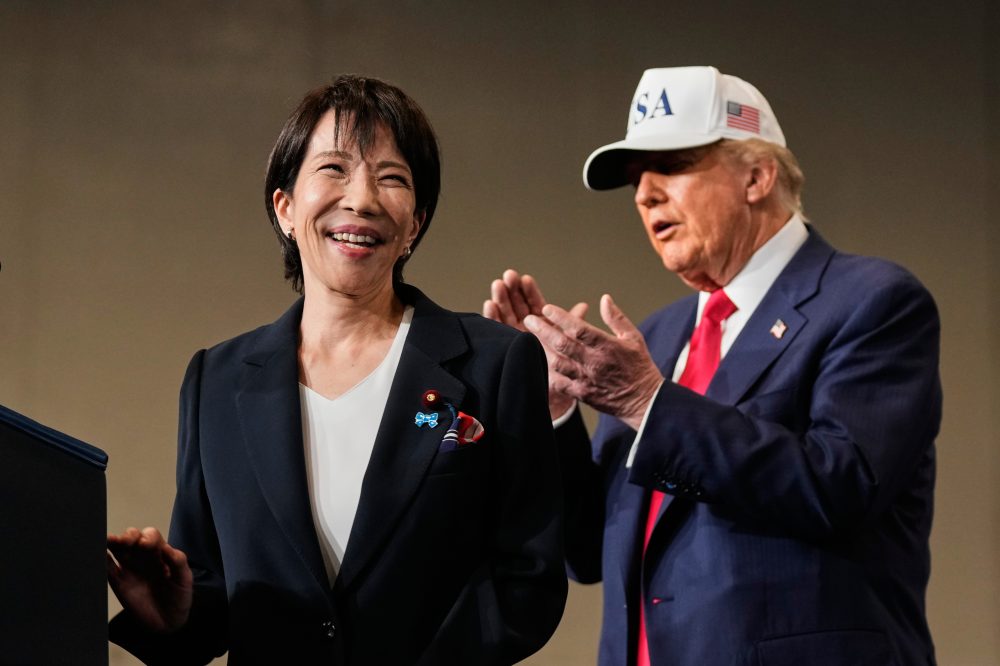
TOKYO (AP) — Japanese Prime Minister Sanae Takaichi’s big election win paves the way for her ruling party to dominate the crucial lower house of parliament. It also gives her the political power to make a strong rightward shift in Japan’s security, immigration and social policies.
Here’s what to know about that divisive conservative agenda, which she calls necessary to make Japan “strong and prosperous.”
Takaichi has pledged to revise security and defense policies by December to bolster Japan’s military capabilities, lifting a ban on weapons exports and moving further away from postwar pacifist principles.
Takaichi wants to build up intelligence-gathering to work more closely with ally Washington and defense partners such as Australia and Britain. She plans to establish a national intelligence agency to meet those goals. She is also pushing to enact a highly controversial anti-espionage law that experts say could undermine civil rights.
Takaichi has followed through on a pledge to U.S. President Donald Trump to push Japan’s annual defense budget to double 2022 levels to 2% of its gross domestic product by March.
Takaichi is set to visit Washington to meet with Trump at the White House on March 19. The U.S. president announced on social media the trip as he endorsed the prime minister ahead of Sunday’s election.
The talks are expected to focus on defense spending, investment commitments under a $550 billion package for Washington that Japan pledged in October, as well as China. Trump will make a trip in April to Beijing to meet with Chinese leader Xi Jinping.
Takaichi’s remarks in November suggesting possible Japanese involvement if China takes military action against Taiwan, a self-governing island that Beijing claims as its own, led to diplomatic and economic reprisals from China.
Takaichi, who has gained firmer political clout after the election, could pursue a more hawkish stance with China. This was hinted at when she mentioned her wish to visit Tokyo’s Yasukuni Shrine, where the remains of war criminals are kept.
Takaichi, who used to be a regular visitor to Yasukuni, has stayed away from praying at the shrine since taking office. But on Sunday, during an interview with Fuji Television, Takaichi said she wants to create an environment to allow a Yasukuni visit that can be understood by neighboring countries, which regularly protest when it occurs.
She has also been pushing for tougher policies on immigration and foreigners.
This resonates with a growing far-right population that has supported the rise of anti-globalist party Sanseito, which says the LDP’s promotion of foreign labor as a solution for Japan’s declining population is making Japanese communities unsafe and causing cultural clashes.
Her government in January approved tougher rules on permanent residency and naturalization, as well as measures to prevent unpaid tax and social insurance.
Takaichi supports the imperial family’s male-only succession and opposes same-sex marriage.
She is also against a revision to the 19th-century civil law that would allow separate surnames for married couples so that women don’t get pressured into abandoning theirs.
In a step that rights activists call an attempt to block a dual surname system, Takaichi is calling for a law to allow the greater use of maiden names as aliases instead.
Her top economic priority is to address rising prices and sluggish wages. And she needs to pass a budget bill for fiscal 2026 to fund those measures.
Takaichi advocates boosting government spending despite concerns that such moves will delay progress on trimming Japan’s national debt, which is about triple the size of its economy.
Takaichi last year introduced a “crisis-management investment” plan in 17 strategic areas such as food, energy, defense and supply chains.
She also proposed a temporary sales tax cut.
She said in her campaign pledge the government will speed up consideration of suspending an 8% food consumption tax for two years to ease the burden of household living costs.
But her ambiguity over the plan, including how to fund the tax cut, caused unease in financial markets. Japan has the highest national debt among advanced economies.
Brought to you by www.srnnews.com
 Death toll in Lebanon building collapse rises to 15
 Explainer-India-US trade pact and its impact on millions of Indian farmers
 UK PM Starmer’s communications director quits
 UK PM Starmer tells staff politics should be force for good