
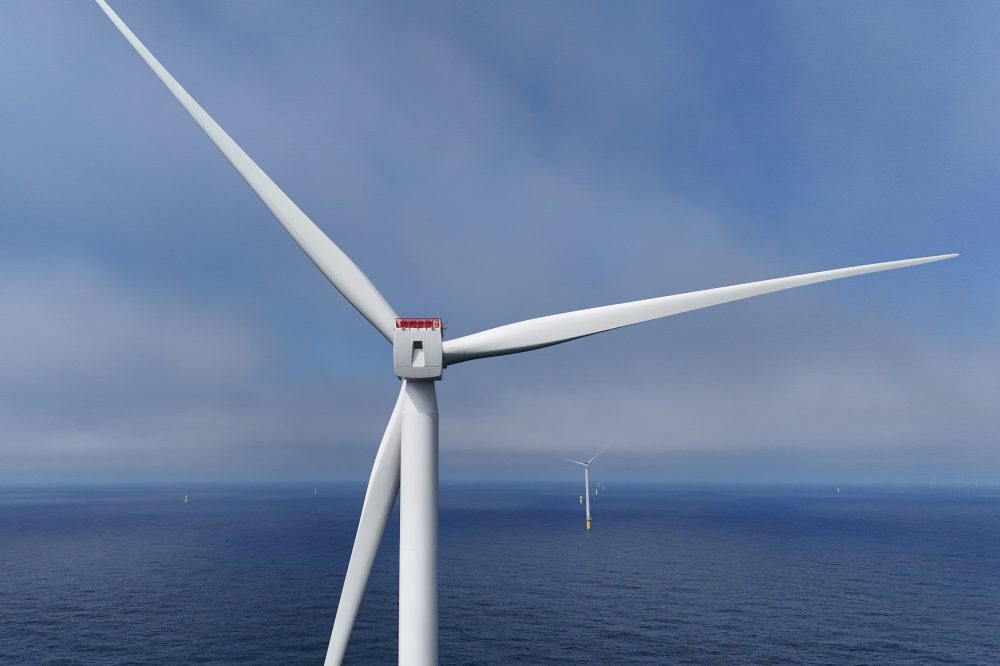
The Trump administration said Wednesday it’s buying back another energy company’s U.S. offshore wind leases for four more wind projects, bringing the total amount spent on these agreements to nearly $2.6 billion.
Chicago-based Invenergy has agreed to end its four offshore wind leases that were very early in development in exchange for reimbursements of lease fees totaling $765 million. The company had already canceled the largest of the four in November, Leading Light Wind off New Jersey’s coast. The others are off the coasts of Maine and California. It will invest that money in natural gas and geothermal ventures that can be built more quickly instead.
By buying back leases, the Republican administration is stopping offshore wind farms that President Donald Trump does not support, and redirecting the money to fossil fuel projects that he does. It adopted this strategy after federal courts thwarted Trump’s efforts to stop offshore wind development through executive action. Trump has frequently talked about his hatred of wind power and calls turbines ugly.
“Under President Trump, companies are shifting investment back toward dependable, secure energy infrastructure that can power our economy and lower utility costs,” Interior Secretary Doug Burgum said in a statement. “We applaud Invenergy for recognizing the importance of baseload power and investing in energy solutions that deliver real benefits to American consumers.”
Hillary Bright, executive director of offshore wind advocacy group Turn Forward, said these buyouts are not one-for-one ‘swaps’ for another kind of energy, since the fossil fuel projects won’t deliver power to the same states as the offshore wind farms would have.
“Replacing coastal offshore wind with geothermal or natural gas infrastructure in another region does nothing to address rising ratepayer affordability concerns, reliability challenges or potential gaps in power supply in the Northeast and mid-Atlantic,” she said in a statement.
Under the first deal announced in March, French company TotalEnergies is getting nearly $1 billion — essentially a refund of its two offshore wind leases — if it invests the money in fossil fuels instead. Those leases were off the coasts of North Carolina and New York. New York is leading a lawsuit challenging the TotalEnergies agreement and Democrats in Congress are investigating it.
Golden State Wind and Bluepoint Wind agreed in April to end their leases in exchange for reimbursements totaling nearly $900 million, provided they invest equally in fossil fuels. California is investigating the deal that ended Golden State Wind, a floating offshore wind farm proposed off the state’s central coast. Bluepoint Wind was an offshore wind farm in the early stages of development off the coasts of New Jersey and New York.
Invenergy is North America’s largest privately held independent power producer. It has four offshore leases: a large lease area for Leading Light Wind, which would have used traditional turbines that affix to the seafloor; two leases for projects with floating turbines in the Gulf of Maine; and a lease for a floating project off California’s central coast.
For Invenergy, the deal offered a way to move forward with energy projects that could bring power to the grid more quickly for its customers than the dormant offshore wind leases. Trump has erected roadblocks for permitting wind energy, while trying to speed up fossil fuel development.
The company left the door open to reentering the offshore wind industry in the future. Daniel Runyan, senior vice president for development at Invenergy, said in a statement that at a time of unprecedented energy demand, they “will deploy additional capital into projects that can be delivered on a commercially reasonable timeline and meet customer demand while continuing to evaluate opportunities as market conditions evolve.”
Leading Light Wind was targeted for as much as 2.4 gigawatts to power more than 1 million homes. Invenergy told the New Jersey Board of Public Utilities in November it was canceling Leading Light Wind because of challenges with the supply chain, equipment and vendors, and changing regulatory requirements.
The floating projects were so early in development that Invenergy hadn’t yet calculated how much power those sites could provide.
Invenergy, a major player in the natural gas sector, has 14 operational natural gas facilities. It’s expanding into geothermal energy, with 45 leases totaling 144,000 acres in Nevada, Idaho, California, Utah and New Mexico. Invenergy plans to use the $765 million from the agreement for natural gas facilities in Indiana, Wisconsin, Iowa, Kansas, and Missouri, and geothermal development in the West. It was not refunded interest paid on the offshore wind lease payments or incremental development costs.
Invenergy has a large portfolio of projects other than offshore wind that produce electricity without warming the planet. That includes about 125 land-based wind farms operating and in construction, more than 60 solar and nearly 30 battery storage projects developed, and many more that it’s actively planning and building.
___
The Associated Press’ climate and environmental coverage receives financial support from multiple private foundations. AP is solely responsible for all content. Find AP’s standards for working with philanthropies, a list of supporters and funded coverage areas at AP.org.
Brought to you by www.srnnews.com
 Eastern Washington wildfire forces evacuations and destroys homes
 Military officials identify all 8 victims of fiery B-52 crash at California Air Force base
 Fed begins Warsh era by keeping rates on hold, sees hike later this year
 US Health Department announces over $700 million to combat mental health, addiction, homelessness