WASHINGTON (AP) — Before taking over the sprawling Justice Department investigation into foes of President Donald Trump, Joe diGenova decried the lack of progress in bringing indictments.
Five months later, diGenova has left his position without charging a single case, clouding the future of an investigation that has animated right-wing commentators eager to prove an ill-defined theory of a “deep state” conspiracy to take down the Republican president.
Justice Department officials are pressing forward despite diGenova’s departure, with a flurry of subpoenas to former law enforcement and intelligence officials expected to yield grand jury testimony in the weeks ahead at the Fort Pierce, Florida, home court of a favored Trump-appointed federal judge.
Yet whether anyone ultimately will be charged, and for what, remains an open question. Investigators face not only legal hurdles and personnel upheaval but an impatient White House after more than a year of fits and starts.
The investigation known familiarly as the “grand conspiracy” case is the clearest example yet of the Trump administration’s efforts to leverage law enforcement powers to enact retribution on the president’s adversaries. The tumult that has defined the probe exposes a familiar gap between White House demands for speedy action and the Justice Department’s ability to craft the president’s litany of grievances into a prosecutable case.
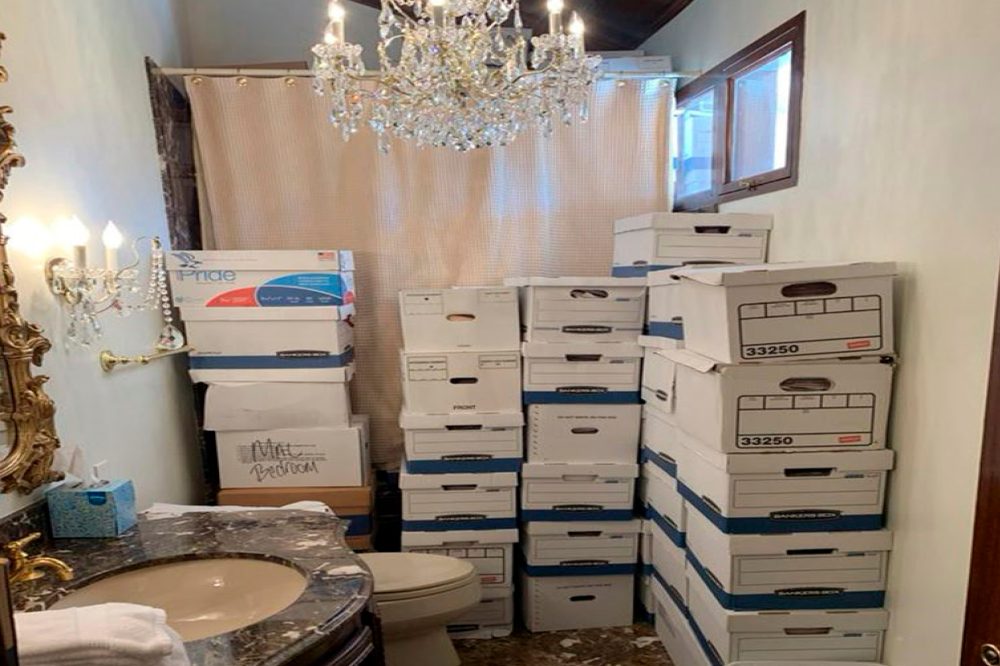
The investigation has always been a tough task, aiming to knit together separate FBI probes of Trump — including related to Russian election interference and his retention of classified documents at his Mar-a-Lago estate in Palm Beach, Florida — into a coherent narrative of a government conspiracy. Prior efforts to investigate the investigators have failed to uncover the kind of criminal misconduct the conspiracy probe aims to prove.
“The idea of connecting all those different investigations into one single conspiracy, there’s no basis for that,” retired federal prosecutor Randall Eliason said. “Then, maybe more importantly, there’s no basis for an allegation that any one of them was actually a criminal act against Trump. They’ve all been verified and upheld in one way or another.”
If the mandate is unusual, so, too, was the person picked to lead it.
DiGenova, who’s 81, was a top prosecutor in President Ronald Reagan’s administration but had been out of government for decades. He made headlines in 2020 after he said a cybersecurity official who attested to the legitimacy of the election Trump lost to Democrat Joe Biden should be “drawn and quartered.” DiGenova apologized after being sued.
A prominent booster of the theory that Trump was victimized by a “deep state” conspiracy, diGenova was appointed in April shortly after Trump ousted Pam Bondi as attorney general after she struggled to prosecute his foes.
The appointment was heralded by Trump allies who regard the probe as a long-awaited reckoning for former officials they believe wronged the president. Attorney General Todd Blanche, who took the reins of the department after Bondi’s firing, also trumpeted diGenova’s arrival, writing on social media: “Welcome to the fight, Joe!”
By Sept. 10, diGenova was gone amid Trump administration frustration with the pace and management of the probe. His parting comments suggested he didn’t see a pathway for imminent indictments.
“If you want indictments where there’s no evidence, you have an ethical problem,” he told the New York Post.
DiGenova told The Associated Press those comments were taken out of context, adding: “There’s plenty of evidence in all of these cases to prove the theories of prosecution. It just takes time to get there, and some people want to get there a little faster than others — and you can’t do that.”
DiGenova was sworn in days after a career national security prosecutor, Maria Medetis Long, was removed from the investigative team after conveying concerns about an investigation into former CIA Director John Brennan.
A lawyer for Brennan has seized on the upheaval, pointing to the departures as proof that prosecutors who have assessed the evidence have been unpersuaded and pushed aside by a Justice Department angling for indictments at all costs.
“I’ve spent decades in and around the Justice Department. I’ve never even conceived of a situation like this,” attorney Ken Wainstein said, in which the Justice Department is “blatantly trying to frame somebody for a crime that is complete fiction.”
He made the comments to a judge last week as he put prosecutors on notice that he intended to attack any indictment of Brennan on the grounds of vindictive prosecution.
The Justice Department has not announced a replacement for diGenova, but a team of prosecutors and agents remains at work, including Kurt Olsen, an attorney who unsuccessfully pushed the Justice Department in 2020 to back Trump’s false election fraud claims.
As the Justice Department reeled last year from the bungled handling of the Jeffrey Epstein files, officials eager to change the topic announced a new investigation and a directive from Bondi, then the attorney general, to present evidence before a grand jury.
The topic was hardly a surprise to anyone tracking Trump’s grievances.
The president has long been infuriated by a U.S. intelligence community assessment that found that Russia interfered on his behalf in the 2016 election, including by stealing politically damaging Democratic emails and orchestrating their release through WikiLeaks, and spent much of his first term shadowed by an investigation into whether his campaign had colluded with Moscow.
A 2019 Justice Department special counsel report described wide-ranging Russian interference but found insufficient evidence to prove a criminal conspiracy between Russia and the Trump campaign.
Subsequent investigations by an inspector general and Justice Department prosecutors identified errors by FBI agents but found no evidence of criminal wrongdoing by senior law enforcement officials nor proof of an anti-Trump conspiracy.
Frustrated by those outcomes, Trump has amplified his demands for retribution, calls the Justice Department heeded by directing that prosecutors use a grand jury. A team in Florida was assigned to hunt for a conspiracy.
Potential targets of the conspiracy investigation are unclear, though lawyers for Brennan have said they’ve been informed he’s one, with prosecutors examining whether he misled Congress during testimony about the intelligence community assessment. Brennan and his attorneys deny that allegation.
Investigators have drilled into the origins of the Trump-Russia probe, with witnesses asked about the preparation of the intelligence community assessment and what’s called the “Steele dossier,” a collection of research files about Trump and Russia compiled by a former British spy that included salacious rumors and unproven assertions.
Subpoenas for records or testimony have been issued during the course of the investigation to a broad array of former FBI and intelligence officials involved in the Russia case, including ex-national intelligence director James Clapper and Brennan, who was recently summoned to appear before the grand jury on Oct. 15.
The Justice Department, meanwhile, has sought interviews with law enforcement officials involved in the 2022 FBI search for classified documents at Mar-a-Lago. The search underpinned an indictment of Trump that was ultimately dismissed by Aileen Cannon, a Trump-appointed jurist whose Fort Pierce court is where the Justice Department anchored its investigation — a move Wainstein has called “judge-shopping.”
Despite the investigation’s turmoil, there’s no reason to expect the Justice Department to back down given the political pressures, said John Fishwick Jr., a former U.S. attorney in Virginia.
“President Trump wants action in certain cases, and this seems to be one of them,” he said.
Brought to you by www.srnnews.com
 There’s an easy way to get rid of all the reusable bags piling up in your home
 The Latest: CNN, MS NOW and Politico say they’re suing over denied White House access
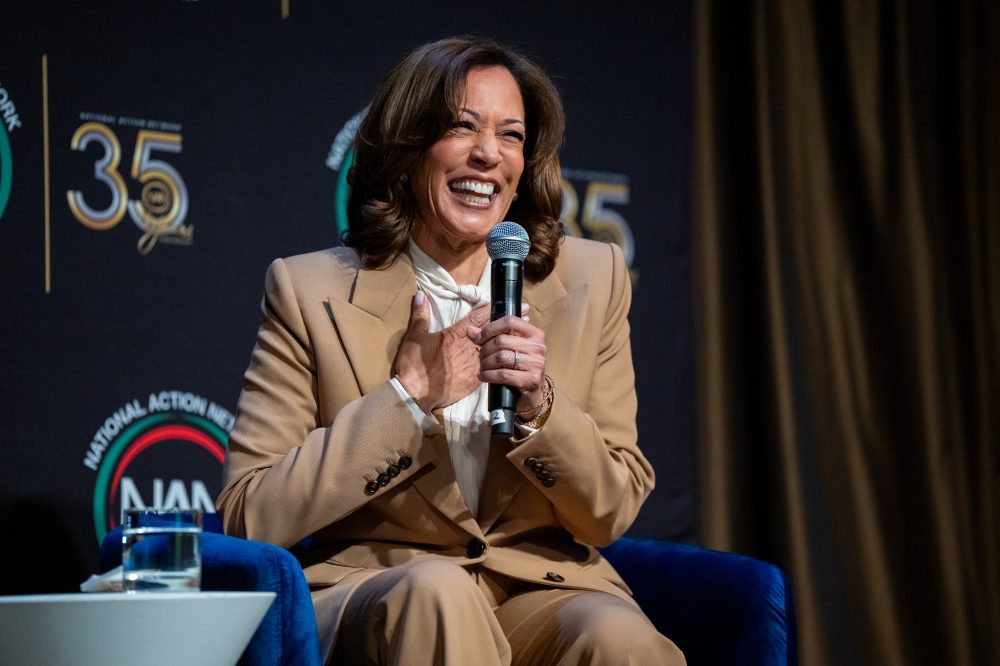 Kamala Harris launches into the 2026 midterms as her 2028 decision looms
 China and the US are competing for AI dominance but have shared concerns over safety