
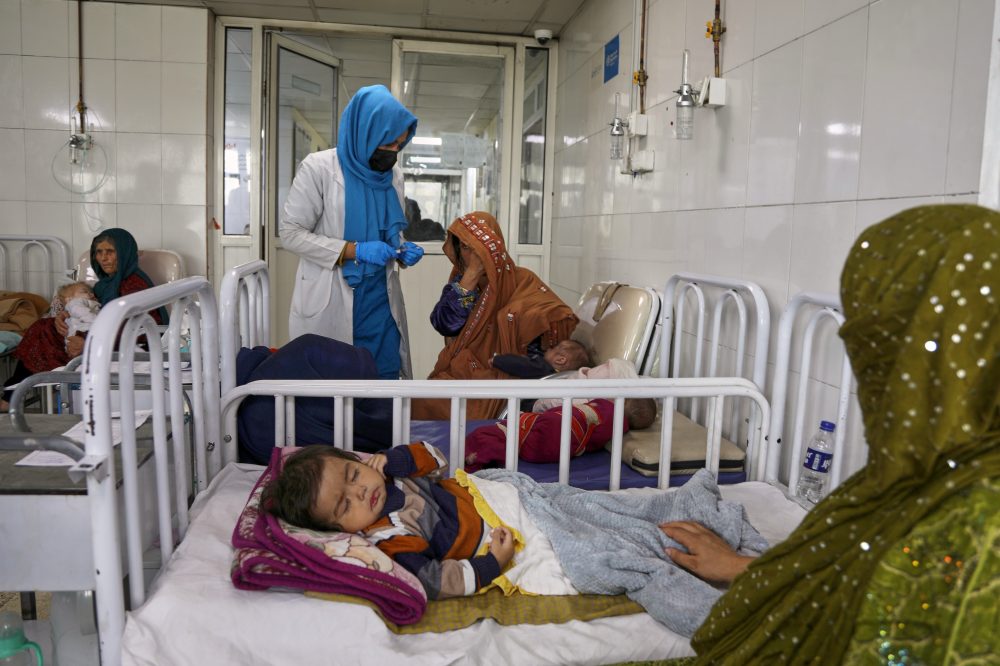
ROME (AP) — Child malnutrition has reached critical levels in a third of Afghanistan’s provinces and is expected to worsen as funding shortfalls force cuts in food distributions and other support, the U.N. World Food Program said Tuesday.
“We must act now to stem the rise in child deaths, which this crisis is provoking,” John Aylieff, WFP’s country director in Afghanistan, said in a statement, adding that “it is already too late for too many.”
WFP said 142 health centers closed in 2025 because of aid reductions and more than 13,000 children lost access to nutrition treatment. It did not mention any specific donor such as the United States, where the Trump administration has made sweeping cuts in foreign aid.
Nearly 3.7 million Afghan children are projected to suffer from acute malnutrition this year, along with 1.2 million pregnant and breastfeeding women, according to WFP.
The agency said 12 Afghan provinces have reached critical levels of acute child malnutrition, a record number. It cited a combination of conflict, unemployment, rising food prices, disease outbreaks, poor water and sanitation and reduced humanitarian funding.
WFP said supply shortages linked to conflict in the Middle East and the nine-month closure of Pakistan’s border because of fighting between the neighbors have disrupted deliveries of nutrition products, leaving nearly one million malnourished women and children without essential nutrition services for five months.
From August through October, WFP said food distributions aimed at preventing famine in the worst-hit areas are being suspended due to lack of funding, even though the annual peak season for malnutrition is between July and October.
It said it urgently needs $540 million over the next six months.
Brought to you by www.srnnews.com
 Bono, Eddie Vedder among mourners at the funeral of Oscar-winning songwriter Glen Hansard
 Iran and Oman make progress on a deal to reopen the Strait of Hormuz, officials say
 Anthropic names global affairs chief to tackle AI policy as Trump tensions persist