
By Francesca Halliwell
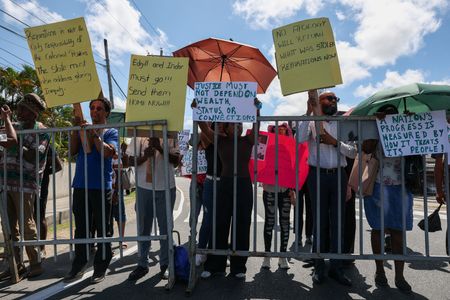
Nov 2 (Reuters) – When British journalist Laura Trevelyan travelled to Grenada in 2023 to apologise for her family’s role in colonial slavery and pledge £100,000 ($134,000) towards education, Caribbean reparations advocates saw more than an act of contrition.
They saw an example of what reparatory justice could look like in practice.
Three years later, as Britain says it is open to an apology and forms of redress short of reparation, campaigners say the Trevelyan family’s approach offers a glimpse of how apology and practical support can work together.
Trevelyan told Reuters she hoped the British government and royal family would move beyond acknowledging the horrors of slavery towards addressing the “legacies of the present”, and forming partnerships that could make a difference.
“There is an urgent need for climate-resilient infrastructure in the Caribbean,” she said. “Isn’t this something Britain’s government could help with as a way of repaying the debt from the period of slavery?”
FUND PROVIDES BURSARIES IN FORMER SLAVE DESTINATION
The Trevelyan fund has helped more than 50 students in Grenada through bursaries and scholarships, according to the Grenada National Reparations Committee.
“If a family can come forward, apologise, and make reparations payments, why not the British government?” said Nicole Philip, vice-chair of Grenada’s National Reparations Committee. “Why not the royal family?”
Commonwealth leaders gather in Antigua and Barbuda this week for a summit expected to be dominated by debate over slavery and reparatory justice, with Caribbean governments pressing former colonial powers to engage more directly.
King Charles, who has repeatedly expressed sorrow for slavery, is expected to make a speech on Tuesday.
But those powers have been reluctant to countenance reparations and the difficult questions they raise: How much should be paid? Should today’s citizens pay for the sins of the past? Who should benefit?
From the 15th to the 19th century, millions of Africans were sold into slavery by European traders, with Britain transporting an estimated 3.2 million people across the Atlantic, according to the Trans-Atlantic Slave Trade Database.
British Prime Minister Andy Burnham, due to attend the summit, wrote in Saturday’s Guardian newspaper that he was open to making a formal apology, but added:
“I do not think that British people today can be held liable for historical wrongs, however heinous, that happened in a different age under different laws and in which they played no personal part.”
He also said he wanted to launch “a new drive on debt”, helping more vulnerable countries “repay over a longer time period and with better rates”.
Campaigners say reparations should not be viewed solely in monetary terms, pointing instead to assistance in education, healthcare, climate resilience, debt relief and development finance as ways of addressing inequalities they trace to slavery and colonialism.
Trevelyan is a former BBC correspondent whose ancestors owned plantations in Grenada. She said family members had researched their involvement in slavery and worked with Grenadian historians and reparations advocates before travelling to the island to apologise publicly and establish the fund.
($1 = 0.7468 pounds)
(Reporting by Francesca Halliwell; Writing by Sam Tabahriti; Editing by Kevin Liffey)
Brought to you by www.srnnews.com
 French petition seeks to shut down Bollore’s news channel CNews
 Belgian government in crisis after budget talks collapse
 Isaac Herzog: the mild-mannered middleman in Israel’s political brawl